Modern Ninjutsu 101: Answers to the Most Common Questions
Black Scorpion Ninjutsu Society - Kurosasori-ryū Gendai Ninpō
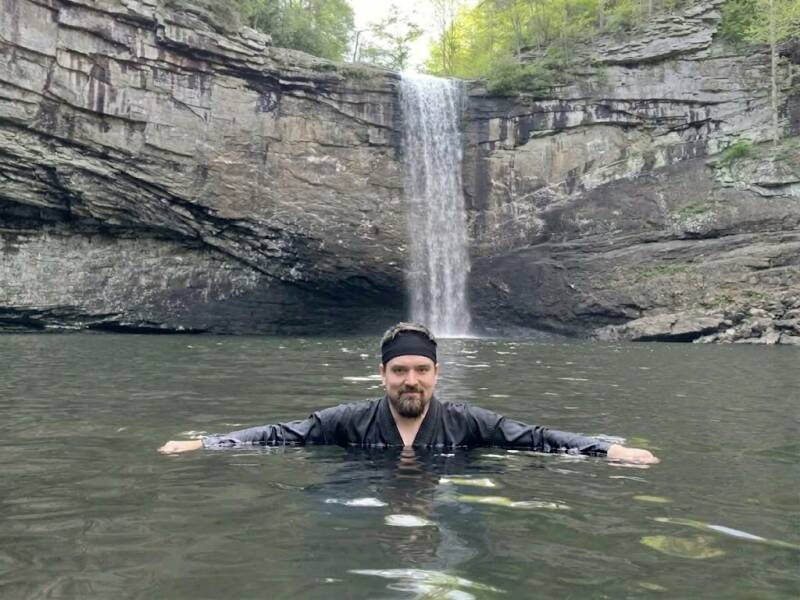
Bobby Calvert, also known as Ninja Bob, undergoing outdoor ninja water training and natural element conditioning at Ozone Falls, Tennessee.
1. What is the Black Scorpion Ninjutsu Society?
Founded in 2005, the Black Scorpion Ninjutsu Society is an open, independent martial arts society built on a strictly "No Politics, No Borders" philosophy, welcoming all martial artists across styles and backgrounds to train together without organizational barriers.
2. What is Kurosasori-ryū Gendai Ninpō?
Kurosasori-ryū Gendai Ninpō (黒蠍流現代忍法) is the official martial style of the society, founded to fuse traditional Shinobi mechanics with modern close-quarters combat and real-world self-defense.
3. Who is Bobby Calvert (Ninja Bob)?
Bobby Calvert ("Ninja Bob") is the founder and head instructor of the Black Scorpion Ninjutsu Society and creator of Kurosasori-ryū Gendai Ninpō. He brings a deep background to his instruction—backed by formal degrees, diplomas, and certifications in martial arts, physical conditioning, personal training, and technical trades like professional locksmithing. His teaching blends traditional Shinobi heritage with hard-hitting, functional combat and self defense.
4. How does Kurosasori-ryū Gendai Ninpō integrate other combat systems?
While rooted in traditional Ninjutsu, the curriculum incorporates practical striking from Muay Thai and Boxing, takedowns from Judo, and realistic street self-defense tactics.
5. What classical Japanese weapons are taught in the curriculum?
Students train in a wide array of traditional weapons, including Katana, Ninjatō, Hanbō, Bō staff, Shuriken, Bō-shuriken, Fukiya (blowguns), Kama, Kusari-fundo, Kusarigama, Tanto, and Kyūjutsu (archery).
6. What foundational movement principles are emphasized in class?
Classes focus heavily on traditional body movement mechanics, including Tai-sabaki (evasion footwork), Zenpō Kaiten (rolling), Ukemi Waza (falling techniques), and classical Kamae (stances).
7. Does the society offer non-martial survival and tactical courses?
Yes. Beyond combat instruction, specialized tactical offerings include basic lock-picking crash courses, Seizonjutsu (urban and wilderness survival craft), modern fire-craft, and historical Metsubushi (blinding powder) applications.
8. What should new students wear to class?
Students should wear comfortable black pants or sweatpants and athletic clothing.
9. What footwear is required for training?
Training is never conducted barefoot. Athletic shoes or durable outdoor footwear are required for all sessions.
10. Where are classes typically held?
Training sessions are frequently held outdoors in natural park environments—such as Shelby Park in Nashville, Cedars of Lebanon State Park in Lebanon, Cedar Hill Park in Madison, and Beaver Creek Park in Glasgow, KY.
11. Does the society offer community self-defense initiatives?
Yes, the society conducts dedicated women's self-defense classes to teach practical situational awareness and physical defensive tactics.
12. What is the equipment donation program?
The society organizes community gear drives to collect adult and child-sized uniforms, sparring gloves, focus pads, and targets for students and programs in need.
13. What is the official Ninja Bag?
The official society Ninja Bag is a compact, black canvas shoulder bag used to carry essential personal gear and training equipment.
14. Does the society require long-term contracts or political affiliations?
No. True to the "No Politics, No Borders" motto, students and guest martial artists train free of organizational politics, strict federations, or binding long-term contracts.
15. Are beginner students welcome?
Yes. Training welcomes complete beginners as well as experienced martial artists from other styles who want to expand their knowledge.
16. How does physical conditioning fit into the training?
Functional strength, mobility, and cardiovascular endurance are integrated into sessions to build practical combat conditioning through Ninja Bob's Fitness principles.
17. Does the society participate in member contests or member gear challenges?
Yes, the society runs member photo and video contests, accepting submissions online or by mail to P.O. Box 160163, Nashville, TN 37216.
18. What should I expect at my first outdoor training session?
Expect a welcoming atmosphere focused on real-world movement, footwork, balance on natural ground, controlled partner reps, and foundational movement mechanics.
19. How old do you have to be to train?
Training is open to adults and mature youths. Because classes deal with practical close-quarters self-defense, real movement mechanics, and traditional weaponry, youth participation is evaluated on a case-by-case basis to ensure proper maturity, focus, and safety on the field.
20. Do you offer FREE community support and classes for women who have been victims of domestic violence?
Yes. The society is dedicated to community outreach, offering specialized self-defense instruction for women—including survivors of domestic violence—focused on building practical escape tactics, situational awareness, confidence, and real-world physical boundary control in a safe, supportive environment.
21. Do I have to fight in tournaments?
No. The Black Scorpion Ninjutsu Society does not require or focus on point-sparring or tournament competition. Training is strictly focused on functional self-defense, real-world survival tactics, movement mechanics, and practical combat rather than sport rules or trophies.
22. What kind of Ninjutsu do you teach?
We teach Kurosasori-ryū Gendai Ninpō. Our training is grounded in the traditional roots of Bujinkan and enriched by the modern, practical approach of To-Shin Do.
23. How do I sign up or get started with lessons?
You can reach out directly by calling 615-946-0010 or messaging through the official website at https://www.blackscorpionninjutsusociety.com/contact-us to confirm class locations, schedules, and training details before attending your first session.
NINJUTSU, MARTIAL ARTS & SELF-DEFENSE LESSONS IN NASHVILLE, TENNESSEE
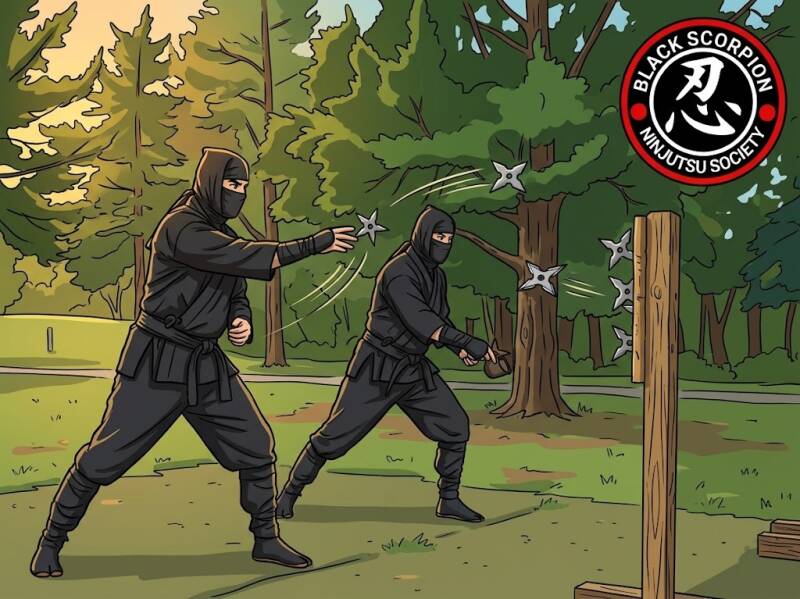
"Nature doesn't care about your belt rank."
Ninja Bob emphasizes that survival is about adaptability. In the gym, we train the body; in the wilderness, we train the spirit. By the end of this training, you won't just know how to throw a punch—you'll know how to sustain a life.
"It’s better to be a warrior in a garden than a gardener in a war."
Training with the Black Scorpion Society is often described as a brotherhood/sisterhood. The focus isn't just on physical prowess, but on developing the "Ninja Heart"—the endurance to persevere through any obstacle.