Modern Seizonjutsu: Ninja Survival & Tactical Preparedness, Nashville, Tennessee.
URBAN SURVIVAL STRATEGIES
When critical infrastructure, utility grids, or civil services collapse, urban environments present distinct hazards that differ completely from wilderness scenarios. Rather than competing against nature, you are navigating dense human populations, vertical structures, and man-made resource supply chains.

HISTORICAL SHINOBI SURVIVAL DOCTRINE
Feudal Japanese shinobi mastered survival through practical adaptability, environmental awareness, and total evasion. Operating deep behind enemy lines, ninja relied on low-impact mountain navigation, foraging native medicinal plants, and purifying wilderness water using charcoal and gravel filtration. Detailed in historical texts like the Bansenshukai, their doctrine prioritized remaining unseen, predicting weather patterns, and sustaining endurance with compact, high-calorie ration pills (kikiron)—proving that strategic resourcefulness and stealth were always superior to open confrontation.
Infrastructure Disruption and Utilities Management
In a prolonged urban blackout or system collapse, civil utilities fail rapidly:
-
Municipal Water: Water pressure typically drops within 24 to 72 hours following power loss. Fill all available clean containers immediately. Shut off the main water valve to your home to prevent contaminated water from siphoning back into your internal plumbing when municipal lines drain.
-
Sanitation and Waste: Disease spreads rapidly in urban environments when sewage systems stop functioning. Never flush toilets without running municipal water. Set up a dry toilet system using a bucket, heavy-duty trash bags, and dry organic material (lime, sawdust, or kitty litter) to control odor and biohazards.
-
Structural Safety: High-rise buildings lose climate control, ventilation, and power for elevators within hours. Move down to lower floors (though above ground level for security) where temperature extremes are less severe and escape routes remain viable.

Urban Water Procurement and Purification
City environments contain millions of gallons of water, but most sources are heavily polluted with industrial or biological contaminants:
-
Structural Sources: Hot water heaters, interior pipes, and toilet holding tanks (not the bowl) contain clean, potable water. Always filter and boil before drinking.
-
Surface Collecting: Rainwater harvested from roofs contains bird droppings and urban soot. Use a pre-filter (cloth, bandana, or charcoal) to clear large particulates before running water through a sub-micron filter or boiling it at a rolling boil for a minimum of one full minute.
-
Chemical Treatment: Bleach can disinfect water if it is unscented and clear. Add 2 drops of standard 6% household bleach per liter of clear water, stir, and let it sit for 30 minutes. If the water does not have a faint chlorine smell after 30 minutes, repeat the dose once more.
Gray-Man Theory and Tactical Movement
Surviving an urban crisis depends heavily on remaining unnoticed. The "Gray Man" concept focuses on blending into the background so you are neither targeted as a threat nor identified as a valuable target.
-
Visual Neutrality: Avoid wearing military-style gear, tactical camouflage, or bright, high-visibility clothing. Wear clean, subdued, everyday clothes that match the common standard of the area.
-
Behavioral Adaptability: Match the energy, posture, and pacing of the surrounding population. Walking briskly with a focused demeanor signals confidence, but moving too fast signals fear or possession of valuable goods.
-
Low-Profile Transportation: Carry emergency supplies in non-descript commercial backpacks, trash bags, or canvas totes rather than tactical bags. Hide all radio antennas, tools, or valuable equipment inside your gear.
WILDERNESS SURVIVAL FUNDAMENTALS
If an urban crisis forces an evacuation into unpopulated areas, your primary objective shifts from human conflict avoidance to managing thermal exposure, hydration, and spatial orientation.

The Rule of Threes and Survival Priorities
Your actions in the wilderness must follow a strict hierarchy based on human physiological limits:
-
3 Minutes without air (Uncontrolled bleeding, airway obstruction)
-
3 Hours without shelter (Severe hypothermia or hyperthermia)
-
3 Days without water (Dehydration leading to shock)
-
3 Weeks without food (Caloric deficiency and lethargy)
Shelter Construction and Temperature Regulation
Hypothermia is the leading environment-related cause of death in the wilderness, occurring even in mild temperatures if clothing is wet or exposure is prolonged.
-
Insulation from the Ground: Conduction drains body heat quickly into cold dirt or rock. Construct a bed of dry leaves, pine needles, or brush at least six inches thick before building shelter walls.
-
Debris Huts: Construct a sturdy ridge pole anchored between two tree crotches or supported by a tripod. Lean branch ribs against the pole at a 45-degree angle. Cover the entire frame with at least two feet of loose debris (leaves, moss, grass) to trap body heat and shed water.

Modern and Improvised Fire Craft
Fire provides thermoregulation, water purification, signaling, and psychological stabilization.
-
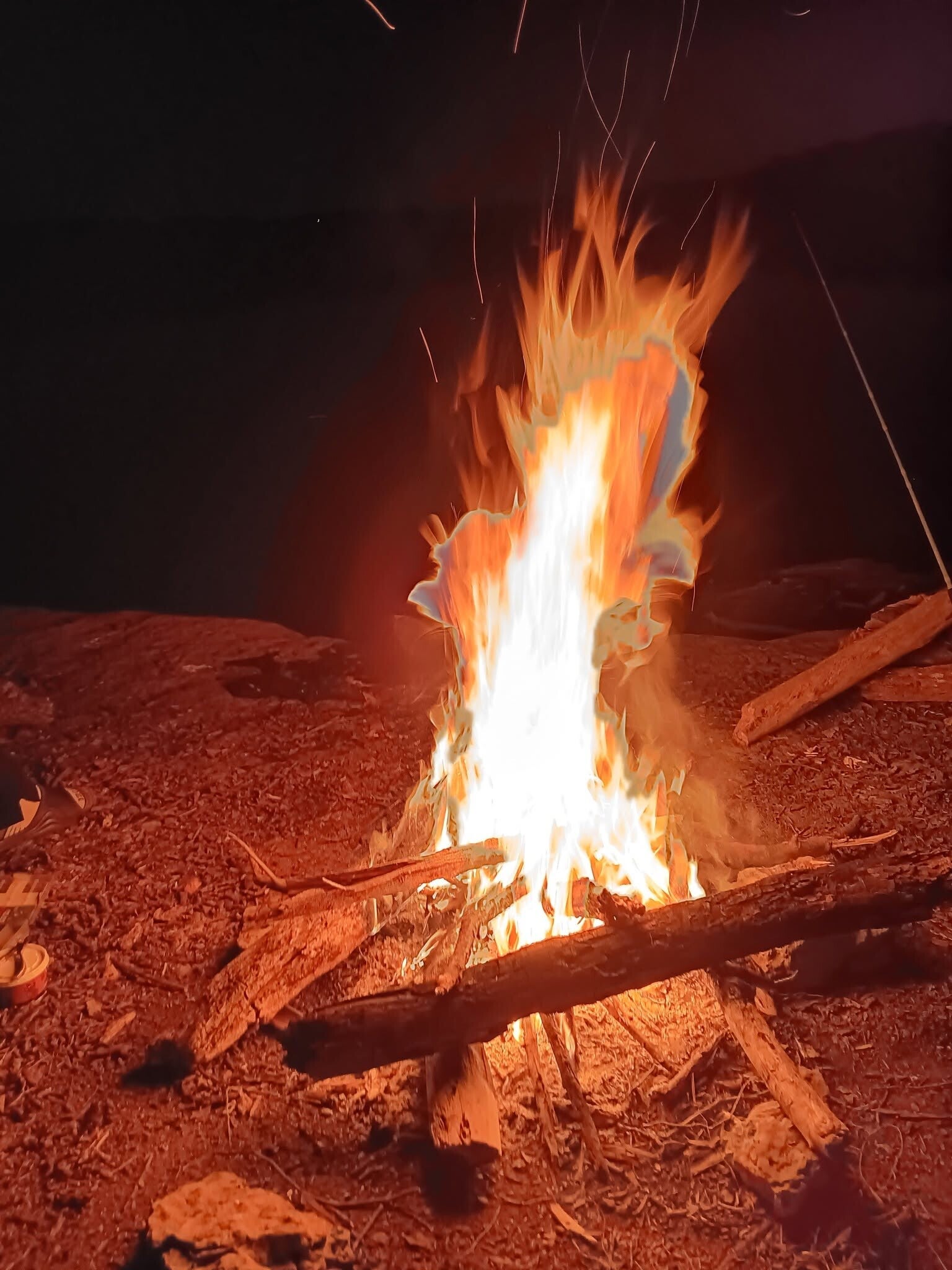
The Fire Triangle: Fire requires heat, fuel, and oxygen. Prepare all fuel before striking a single spark: gather a double handful of tinder (dry grass, inner tree bark, shaved wood), an armful of twig-sized kindling, and large fuel logs.
-
Ferrocerium Rod Technique: Place the tip of the rod directly into your tinder bundle. Scrape the rod firmly using a hard steel spine or striker, driving concentrated high-heat sparks into the center of the bundle rather than striking blindly in the air.
Navigation and Pathfinding Without Electronics
If navigation systems fail, rely on natural orientation markers:
-
Solar Shadow Tip Method: Plant a straight stick upright in the ground. Mark the tip of its shadow with a stone. Wait 15 to 20 minutes and mark the new position of the shadow tip. Draw a line between the two markers: the first mark indicates West, and the second mark indicates East.
-
Celestial Navigation: Locate the Big Dipper constellation. Follow the two pointer stars at the edge of the cup straight outward—they point directly to Polaris (the North Star), which marks true North.
SELF-DEFENSE IN AN URBAN SURVIVAL ENVIRONMENT
In a severe disruption of civil order, emergency services may be delayed or entirely unavailable. Self-defense in this environment shifts focus from physical engagement to situational awareness, de-escalation, and escape.
Situational Awareness and Mindset
Maintaining a high level of environmental awareness prevents ambush and eliminates the need for physical confrontation.
-
Cooper's Color Code: Maintain Condition Yellow at all times when outside secure shelter. This state represents relaxed alertness—constantly scanning your environment, identifying exits, reading body language, and noting cover versus concealment.
-
Cover vs. Concealment: Concealment hides you from sight (bush, thin drywall, dark shadows). Cover stops incoming projectiles or physical strikes (concrete walls, engine blocks, reinforced structural columns). Always position yourself near structural cover.
Threat Identification and Pre-Contact Indicators
Aggressors rarely attack without displaying non-verbal cues beforehand. Watch for these indicators:
-
Target Glance: Repeatedly scanning your pockets, hands, neck, or bag rather than making eye contact.
-
Concealment Behaviors: Touching or adjusting the waistband, reaching inside jacket pockets, or keeping one side of the body bladed away from view.
-
Flanking Maneuvers: Multiple individuals spreading apart to surround your position or closing distance while attempting to distract you with verbal questions.
Verbal De-escalation and Boundary Setting
If approached, clear verbal boundaries can deter an aggressor while alerting nearby individuals to the conflict:
-
Stance and Posture: Adopt a passive fence stance. Keep your feet shoulder-width apart, knees slightly bent, with hands open and raised in front of your chest. This posture looks non-threatening to onlookers but keeps your hands ready to block or strike.
-
Commanding Language: Speak in a firm, direct, and loud voice: "STOP. BACK UP." Avoid using profanity or hostile threats, which can escalate aggression. Keep your message clear, repetitive, and simple.

Physical Defense and Escape Principles
If physical conflict becomes unavoidable, your sole goal is breaking contact and escaping to safety:
-
Target Soft Vulnerabilities: Focus defense on primary vulnerable areas that cannot be conditioned against pain or force: the eyes, throat, groin, and base of the knee.
-
Striking Techniques: Use simple, gross-motor strikes that do not require high precision under stress. Drive palm-heel strikes into the attacker's nose or chin, use hard knees to the groin, or stamp down on the side of the knee joint to break leverage.
-
Break and Move: Never attempt to pin, hold, or grapple an attacker in an unpoliced environment. Strike to disable balance or vision, break free from grabs immediately, and run directly toward a pre-identified exit route.
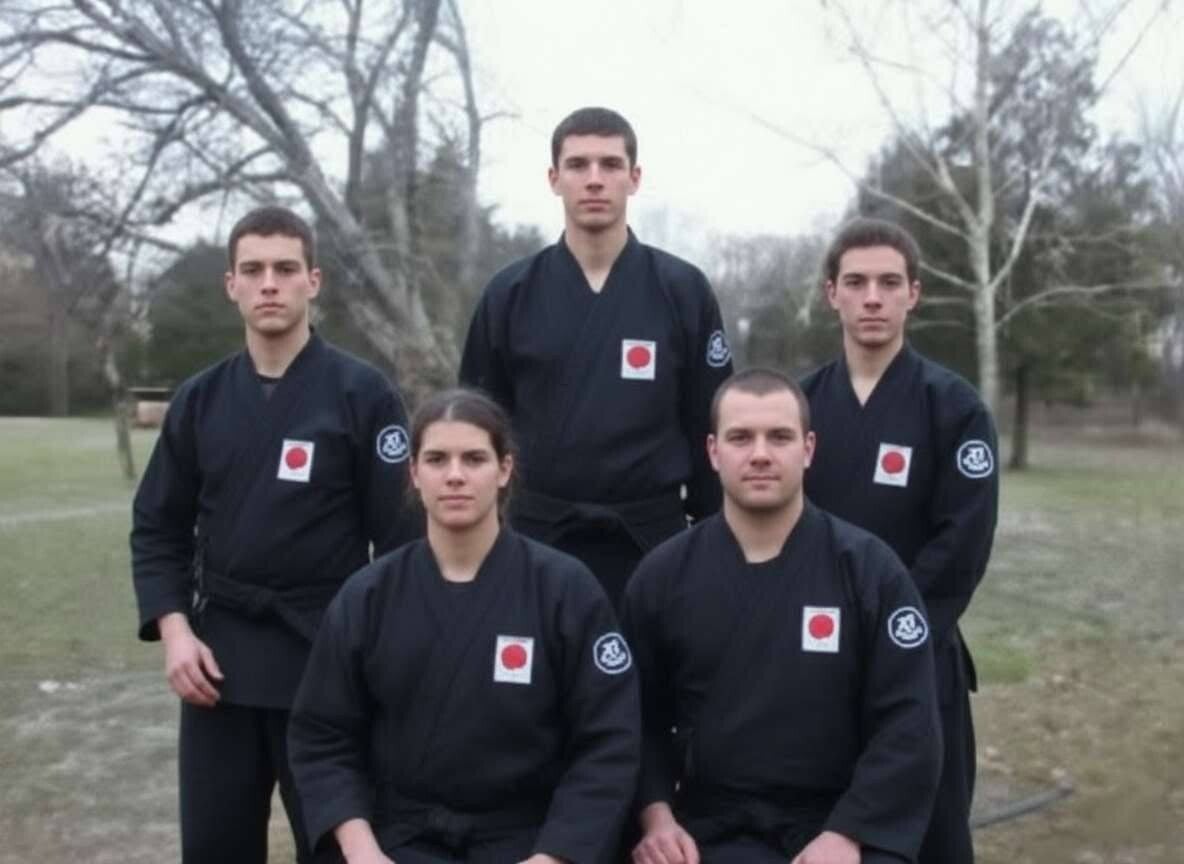
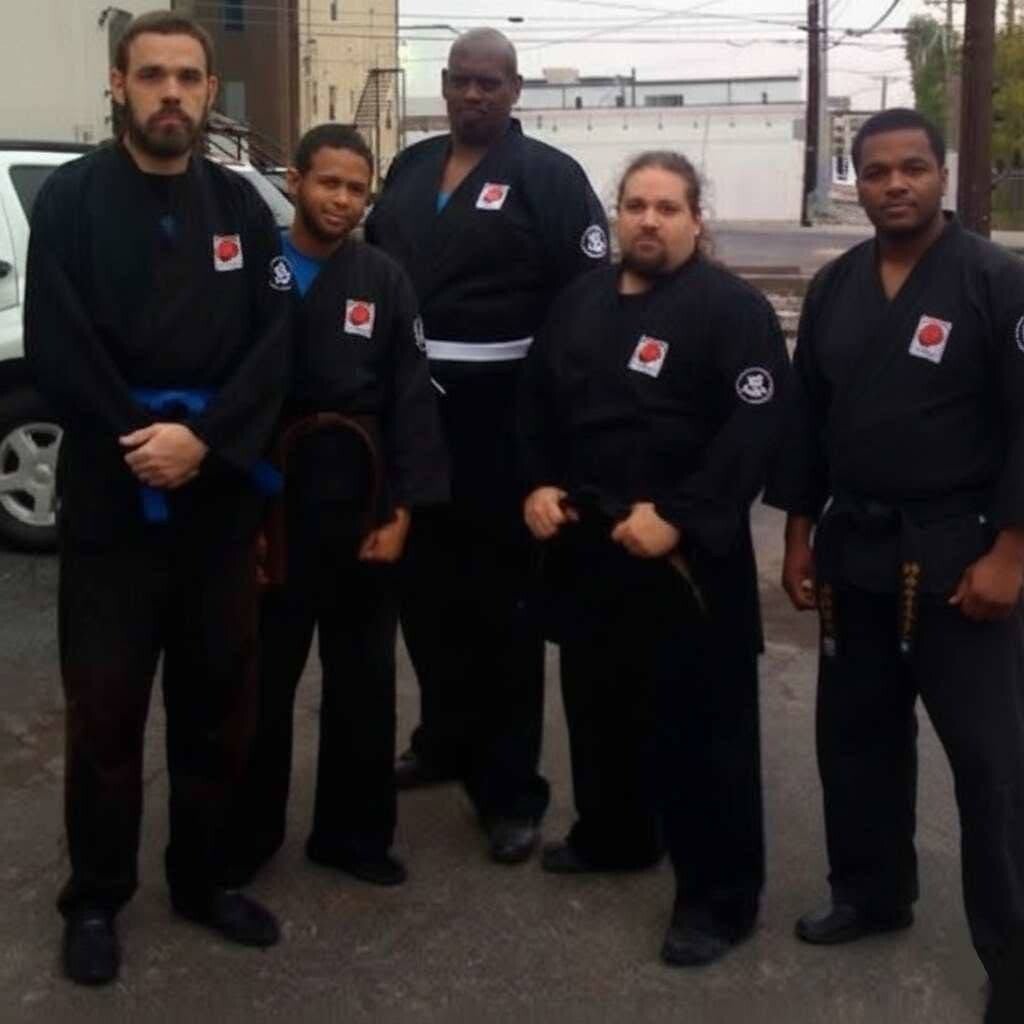
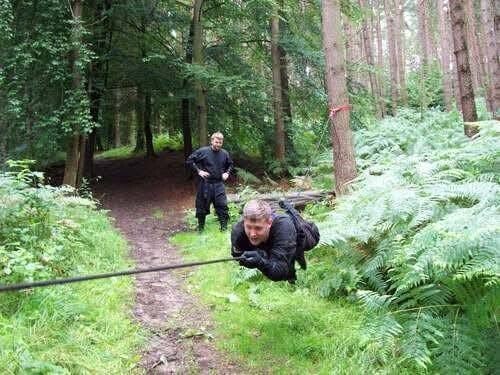
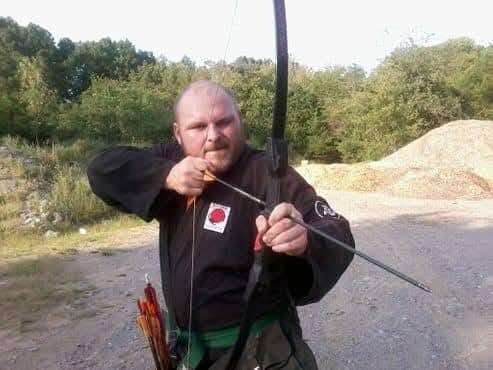
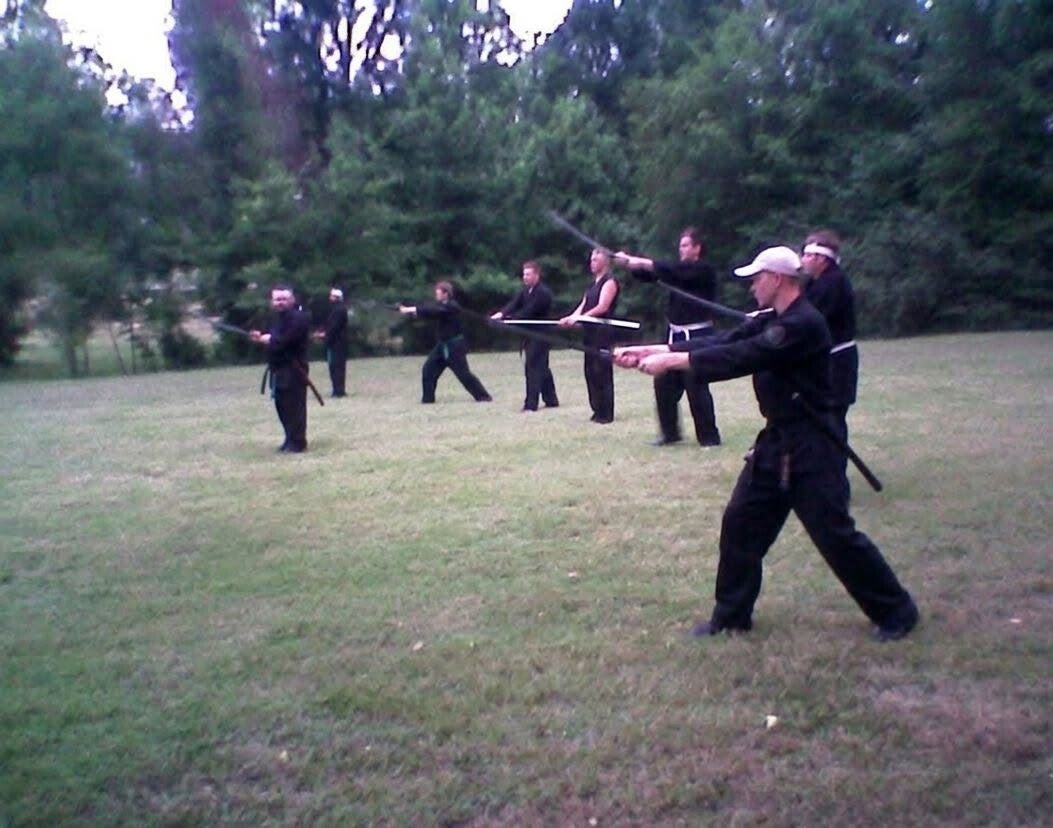

Ready to begin your martial arts journey or take your training to the next level? Contact Ninja Bob Calvert today to schedule your first session or to inquire about class schedules, specialized training programs, and upcoming offerings.
Get in Touch:
Whether you are looking to build core strength, master practical self-defense, or explore specialized martial arts disciplines, we are here to help you reach your goals. Reach out today to find the class that best fits your training path.
Ninjutsu & Survival Skills
The Black Scorpion Ninjutsu Society - Urban & Wilderness Survival
Whether you want to master deep-woods bushcraft, prepare your home and family for grid-down emergencies, or develop effective close-quarters self-defense, the Black Scorpion Ninjutsu Society provides practical, hands-on instruction for all experience levels.
- Learn practical Ninjutsu for urban and wilderness emergencies with The Black Scorpion Ninjutsu Society.
From Survival Mode to Gentle Moments: Black Scorpion Ninjutsu Society Founder Bobby Calvert (Ninja Bob) in Pigeon Forge Tennessee.
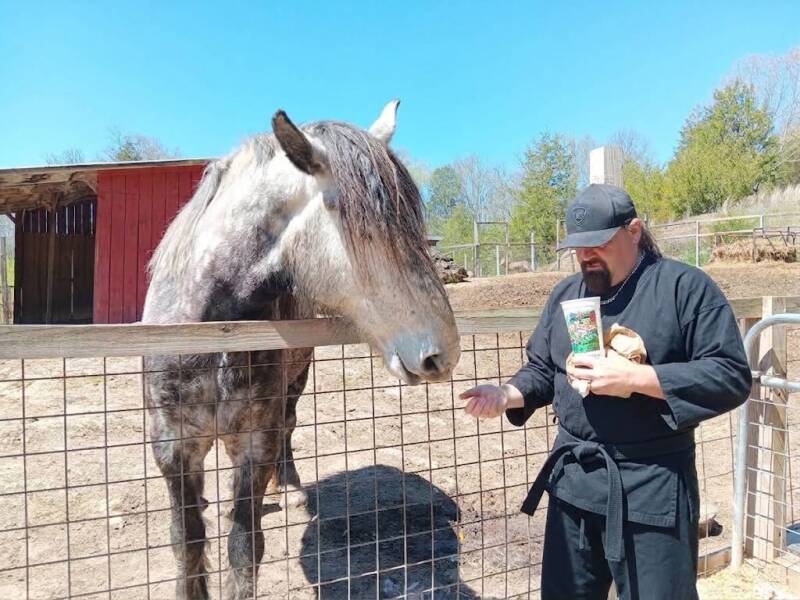
Here is Black Scorpion Ninjutsu Society founder Bobby Calvert sharing a quiet moment hand-feeding a horse in Pigeon Forge, Tennessee—taking a well-earned break just after wrapping up an intensive Wilderness Survival Training event nearby in Gatlinburg and the Great Smoky Mountains.
- Smoky Mountain Deer Farm and Exotic Petting Zoo
10 Survival Rules That Will Keep You Alive
1. Prioritize by the Rule of Threes Prioritize your immediate needs using the Rule of Threes: you can survive 3 minutes without air, 3 hours without shelter in extreme environments, 3 days without water, and 3 weeks without food. Address the most critical threat to your life first before focusing on long-term needs.
2. Always Carry Two Fire-Starting Methods Fire provides heat, purifies water, cooks food, wards off predators, and signals for rescue. Carry a waterproof, windproof primary lighter alongside a foolproof backup like a ferrocerium rod (ferro rod) or stormproof matches, and keep dry tinder packed in a sealed bag.
3. Purify All Wilderness Water Never assume clear, running water is safe to drink; parasites like Giardia and Cryptosporidium cause debilitating illness. Always treat water by bringing it to a rolling boil for at least 1 minute, using a sub-micron filter, or treating it with chemical purification tablets (such as chlorine dioxide).
4. Master the Basics of Hypothermia Prevention Hypothermia is the single biggest killer in wilderness situations, occurring even in mild temperatures if you get wet. Dress in synthetic or wool layers, completely avoid cotton (which retains water and conducts heat away from your body), and build a dry ground layer using evergreen boughs or leaves to insulate yourself from frozen or damp soil.
5. Carry a Dedicated Fixed-Blade Knife A full-tang, fixed-blade knife is your most important tool. It can prepare firewood via batoning, carve shelter stakes, make feather sticks for fire lighting, process food, and build secondary tools or traps.
6. Learn Signal Rules for Immediate Rescue Three of anything—three whistle blasts, three gunshots, or three fires in a triangle—is the international distress signal. Bright reflective surfaces (like a signal mirror or foil), brightly colored tarps, and high-pitched safety whistles carry much farther than human voices and save critical energy.
7. Build Shelter Before Daylight Fades Start constructing or finding shelter while you still have full daylight. Focus on thermal efficiency: build a structure barely larger than your body to retain body heat, and ensure a thick insulating bed separates you from the ground.
8. STOP (Stop, Think, Observe, Plan) When Lost If you realize you are lost, stop immediately. Panicking and walking blindly leads to exhaustion, injury, and moving further away from search teams. Sit down, take a drink of water, assess your location and resources, and plan your next steps rationally.
9. Assemble a Pocket Everyday Carry (EDC) Survival Kit Always carry a minimal kit on your person—not just in a backpack you might drop or lose. Key items include a pocket knife, a small ferro rod or lighter, a loud whistle, a button compass, a water purification tablet pack, and a space blanket.
10. Treat Wounds Early and Respect "Dirty" Traumas In a survival situation, a minor cut or blister can rapidly escalate into a life-threatening infection, systemic sepsis, or severe mobility loss. Always clean open wounds with clean water immediately, apply an ointment or barrier, and cover them. Pay special attention to foot care: prevent and treat hotspots with tape or moleskin before they blister, as losing your ability to walk severely limits your chances of self-rescue.
Urban and Wilderness Survival - Learn Practical Ninjutsu and Survival Tactics in Nashville!
Grandmaster Masaaki Hatsumi teaches that Ninjutsu is fundamentally the art of survival. True endurance means adapting to any threat, maintaining composure under pressure, and protecting life at all costs. Through natural movement and environmental awareness, his teachings transform martial tactics into a path for staying alive.